A real outfit has a point of view: fabric, fit, silhouette, and a palette that all agree. That is what you are prompting for.
A real outfit has a point of view: fabric, fit, silhouette, and a palette that all agree. That is what you are prompting for.
You nailed the face, the pose feels alive, the light is gorgeous, and then your character is wearing a vague, shapeless "dress" that screams stock template. Sound familiar? Wardrobe is the quiet half of a portrait, and a styled outfit can carry a whole story while a generic one flattens everything around it. The best part is that clothing is completely promptable once you stop typing "nice outfit" and start describing fabric, fit, and silhouette like a stylist would. Pull up a chair and let me show you how.
Hey friends. Today we are dressing our characters with intention, because wardrobe is one of the most underrated tools in the whole craft. An outfit instantly tells the viewer who this person is, where they are going, and what mood they are carrying. A soft oversized knit reads cozy and gentle; a sharp tailored blazer reads confident and in control; a flowing slip dress reads romantic and weightless. Same face, same pose, three completely different stories, all decided by the clothes.
Here is the encouraging part. Your model has studied an enormous amount of real fashion photography, so it already knows what linen, leather, denim, and silk look like when they catch the light. Your job is to stop asking for a generic garment and start naming the fabric, the fit, and the shape. The moment you do, the whole figure stops looking dressed by accident and starts looking styled on purpose.
Beginners describe clothing by category alone: "a dress," "a jacket," "a top." That is the wardrobe equivalent of asking for "food," and the model fills in the blank with the most average, forgettable version it knows. The fix is a simple three-part formula you can run on any garment: name the fabric, name the fit, and name the silhouette. Instead of "a dress," write "a bias-cut silk slip dress in deep emerald, draping softly over the figure." Now the model knows the material to render, how it should hang, and the shape it should cut against the body.
This formula is the backbone of the entire article. Fabric tells the model how light behaves on the cloth, whether it should look matte, glossy, sheer, or chunky. Fit tells it how the garment relates to the body, whether it clings, drapes, or stands away in structured volume. Silhouette tells it the overall shape, the line the outfit cuts in the frame. Get those three right and a plain prompt turns into a styled look. Fabric also leans directly on the same surface skills in our guide to texture and materials, since a believable knit or leather is really a texture problem in disguise.
The fastest styling upgrade: never name a garment alone. Run every piece through fabric plus fit plus silhouette. Swap "a jacket" for "a cropped boxy denim jacket, slightly oversized, raw hem" and a flat prompt becomes a real, specific outfit.
A stylist does not just pick pieces, they make pieces agree. The two tools that turn separate garments into one outfit are layering and a color palette. Layering gives depth and realism: a tank under an open shirt under a coat reads far more lived-in than a single floating top. Describe the stack in order, from the skin out, and the model builds believable depth instead of a confused mush of fabric.
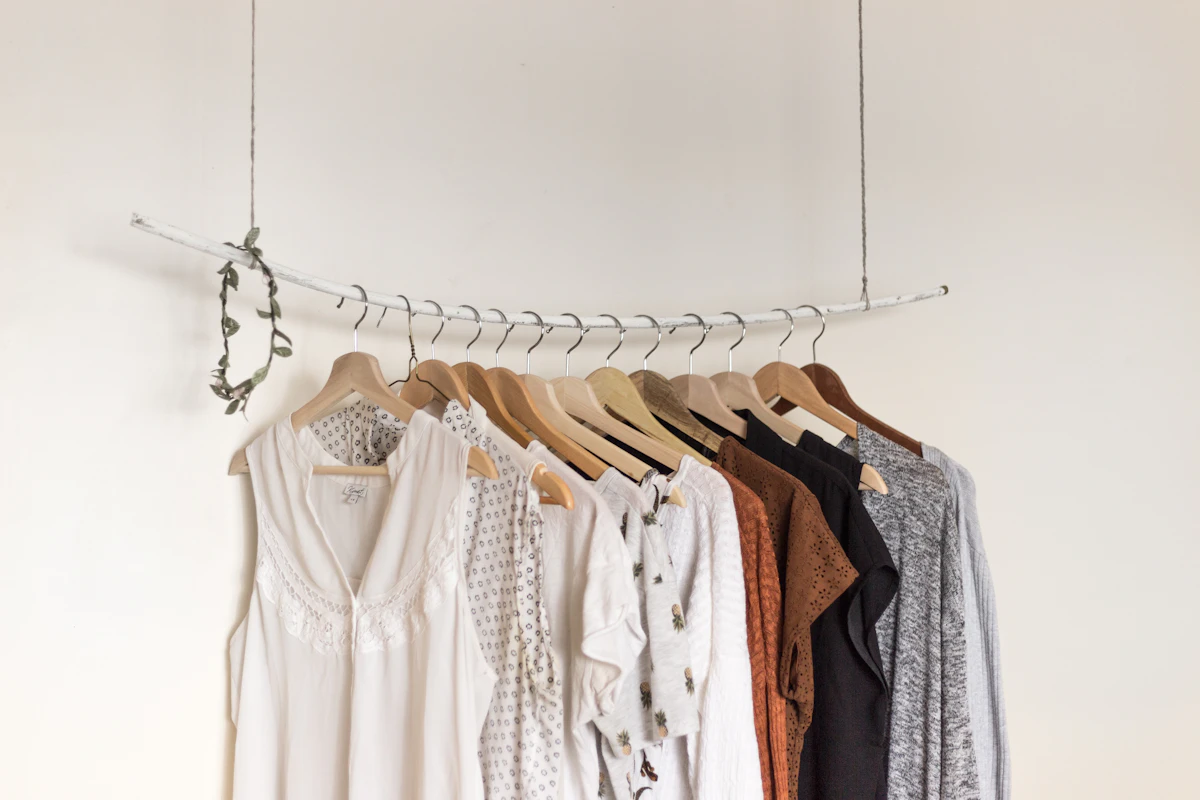
The color palette is what makes the whole thing feel intentional. Decide on a small, deliberate scheme before you prompt, the same way you would plan the colors of the scene. A tight, harmonious palette like "warm earth tones, camel, rust, and cream" looks styled, while a random clash of loud colors looks like the model guessing. If you have read our walkthrough of color palettes and mood, this is the same idea applied to the wardrobe, and letting the outfit echo the colors of the background ties the entire image together.

A coordinated rack, not a random pile. Layering and a tight palette are what turn separate pieces into one styled look.
One of the most fun things you can do with wardrobe is borrow a whole world with a few words. Clothing is loaded with era and genre signals, and the model knows them well. Lean on them on purpose: "1970s flared corduroy and a wide-collar blouse" instantly time-stamps the image, "soft cottagecore linen with a hand-knit cardigan" conjures a gentle pastoral mood, and "sleek cyberpunk techwear with reflective panels" drops you into a neon future. You are not just dressing a person, you are choosing the era and the genre the viewer steps into.
The trick is to keep the wardrobe in agreement with everything else in the frame. If the outfit says 1970s and the background says glass-and-steel office, the eye feels the conflict even if it cannot name it. Let the clothes, the setting, and the styling all tell the same story. And when an outfit is meant to read as a specific costume, like a uniform or a period gown, naming a clear reference world gives the model a strong anchor to build from rather than an average guess.
| What you want | Prompt words to try |
|---|---|
| A specific, styled garment | fabric + fit + silhouette, e.g. ribbed cashmere, fitted, high turtleneck |
| A lived-in, layered look | tank under open linen shirt under tailored coat, layered, described skin-out |
| An intentional color story | tight palette: camel, rust, cream; or monochrome charcoal head to toe |
| A specific era | 1970s flared corduroy, 1990s slip dress, soft cottagecore linen |
| A genre world | cyberpunk techwear, dark academia tweed, coastal linen resortwear |
| Believable fabric behavior | draping silk, stiff structured denim, chunky knit, sheer chiffon |
Here is where wardrobe gets tricky and rewarding at the same time. If you are telling a story across several images, the outfit has to stay the same from frame to frame, or your character looks like they changed clothes between every shot. The first defense is a tight, specific wardrobe description you copy word for word into every prompt, because vague clothing drifts and detailed clothing holds. Write the outfit once, lock the exact fabrics and colors, and reuse that block everywhere.
For real consistency, pair that locked description with the identity tools you already know. The same approach that keeps a face stable across a set will help anchor a signature outfit, so this stacks beautifully with our guide to keeping the same face every time. And remember that lighting changes how every fabric reads, so a glossy satin looks like a different material under hard light than under soft window light. If you want the outfit to look its best, our walkthrough of lighting and mood is the natural companion to this one.
This is the part I love about wardrobe: it is pure storytelling, and you get to be the stylist. Once the formula clicks, you will start seeing it everywhere, the way a single well-chosen coat can change a whole mood, how a fabric catches light, the quiet power of a tight color palette. The recipe is small enough to keep in your head: name fabric, fit, and silhouette instead of a bare garment; layer pieces and unify them with a palette; borrow an era or genre on purpose; and lock the description when you need the outfit to stay put.
Try it on your very next render. Take a figure wearing a vague "dress" and rewrite it as a real outfit with a fabric, a fit, a shape, and a color story. Watch a generic template turn into a character who looks dressed by someone who cared. And once the outfit is singing, frame it like it deserves with our guide to composition and framing. Go style something beautiful, and have fun playing dress-up.