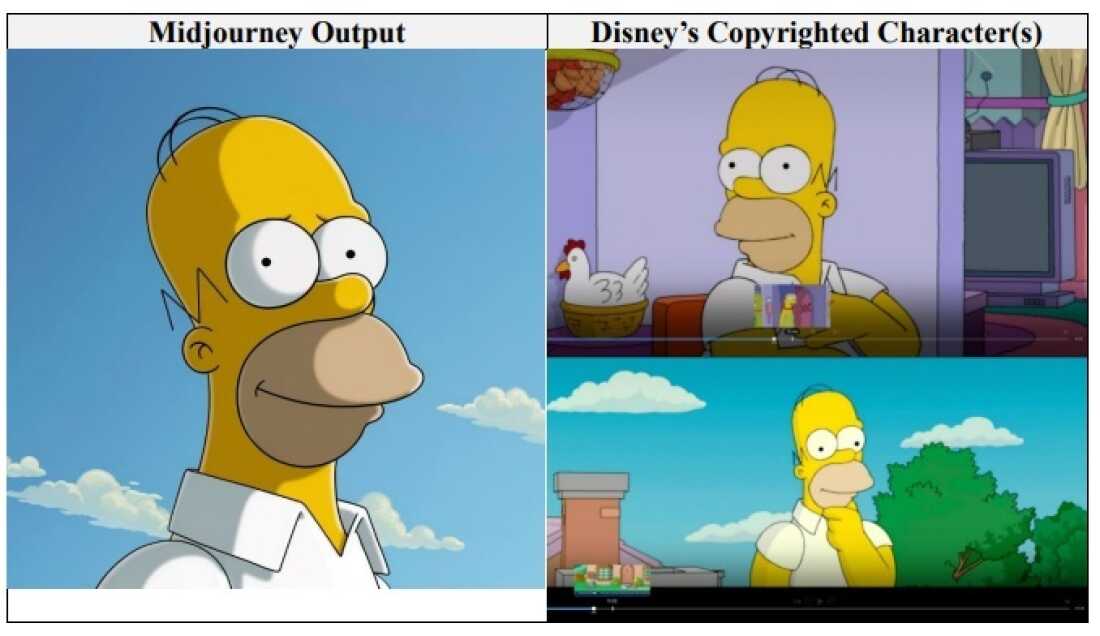
If you're part of the AI art community, you've probably been watching this one closely. And honestly, you should be. In June 2025, Disney and Universal filed a massive, 110-page copyright infringement lawsuit against Midjourney, one of the biggest names in AI image generation, with around 20 million registered users. It was the first time Hollywood heavyweights had ever taken direct legal action against an AI art company. And now, in early 2026, the case is heading toward settlement talks. What happens next could reshape the entire landscape for all of us who create with AI tools.
Let me break down what's going on, what it means for hobbyist AI artists, and what I think we should all be thinking about going forward.
What Actually Happened
Disney and Universal filed their complaint in U.S. District Court in Los Angeles, and they did not hold back. The lawsuit accuses Midjourney of operating what they call a "virtual vending machine" that generates "endless unauthorized copies" of their copyrighted characters. We're talking Darth Vader, Homer Simpson, Shrek, Spider-Man, Elsa from Frozen, and over 150 other copyrighted works listed in the complaint. The studios are seeking up to $150,000 per infringed work, which could push total damages past $20 million.
Disney's Chief Legal Officer put it bluntly: "Piracy is piracy, and the fact that it's done by an AI company does not make it any less infringing." That quote tells you exactly how seriously Hollywood is taking this.
Then in September 2025, the studios expanded the fight by filing a separate lawsuit against MiniMax, the China-based company behind Hailuo AI, alleging similar copyright infringement in training their image and video generators. So this is clearly not a one-off. This is a deliberate legal strategy to set precedent across the entire AI image generation industry.
Midjourney's Defense: Fair Use
Midjourney fired back in August 2025 with a 43-page response. Their argument? Fair use. They claim their use of copyrighted material for training falls within legal fair use parameters. And here's the interesting twist: Midjourney's lawyers allege that Disney and Universal themselves use and profit from Midjourney and other generative AI tools. If true, that's a pretty bold counter-argument.
The fair use question is really at the heart of everything. AI companies have generally argued that training models on copyrighted data is transformative and therefore protected. But courts have been inconsistent. In July 2025, a judge ruled that using legally purchased copyrighted content for LLM training constituted fair use. However, other cases have gone the opposite direction. There's no clear, universal answer yet, and that uncertainty is exactly what makes this Disney case so important.
Why This Matters for Regular AI Artists Like Us
Here's where it gets personal. Most of us aren't generating Shrek or Darth Vader images. We're creating original compositions, exploring artistic styles, building characters that come from our own imaginations. But this lawsuit could still impact us in several meaningful ways.
First, if Disney wins convincingly, AI companies might be forced to retrain their models using only licensed content. That could change what these tools are capable of producing. The models we rely on could become more limited, or the companies behind them might need to charge significantly more to cover licensing costs. Free and low-cost access to powerful AI art tools could become a thing of the past.
Second, even a settlement could create ripple effects. The case is currently heading toward a settlement conference with a private neutral, with an August 2026 deadline for any agreement. Whatever terms Disney and Midjourney agree to could become the informal industry standard. Other AI companies will likely follow whatever precedent gets set here.
The Bigger Copyright Picture for AI Art
Beyond this lawsuit, the overall copyright landscape for AI-generated art has been evolving rapidly. The U.S. Copyright Office released a major report in January 2025 stating that "prompts alone do not provide sufficient human control to make users of an AI system the authors of the output." In plain English: if you just type a prompt and hit generate, you probably can't copyright the result.
But there's nuance here. If you select, edit, arrange, and substantially modify AI-generated elements with genuine creative judgment, you may be able to claim copyright protection over the final work. The key is demonstrating meaningful human creative contribution that goes beyond just writing a text prompt.
And then in March 2026, the U.S. Supreme Court declined to hear an appeal in the Stephen Thaler case, leaving intact the ruling that works created entirely by AI without human authorship cannot receive copyright protection. That's now settled law.
The Economic Reality We Can't Ignore
I want to be honest about something that makes this conversation uncomfortable. A 2025 survey found that 74% of professional visual artists reported lost income directly attributable to clients substituting AI-generated imagery for commissioned work. That's a real, significant number. As someone who loves AI art, I also care about human artists who are being economically impacted.
This lawsuit isn't just about Disney protecting its billion-dollar IP. It's also about establishing whether AI companies need permission to learn from existing creative work. The outcome affects independent illustrators, photographers, and designers just as much as it affects mega-corporations. And I think it's important for us in the AI art community to hold space for that complexity rather than dismissing these concerns.
Practical Advice for AI Artists Right Now
While the legal landscape continues to take shape, here are some things I'd recommend for anyone creating AI art in 2026:
- Avoid generating recognizable copyrighted characters. This seems obvious, but it's the exact behavior that triggered this lawsuit. Don't prompt for Darth Vader, Mickey Mouse, or any specific copyrighted character. It's not worth the risk.
- Document your creative process. If you want any shot at copyright protection for your AI-assisted work, keep records of your prompts, your editing process, your selection criteria, and all the human creative decisions you made along the way.
- Add substantial human effort. The more you modify, curate, composite, and refine AI outputs with your own creative judgment, the stronger your claim to the final work becomes.
- Stay informed about your tools. Know what model you're using and whether the company behind it has licensing agreements in place. This could matter more and more as legal standards develop.
- Support fair solutions. The best outcome for everyone is a system where AI companies can train on diverse data while creators are fairly compensated. That balance hasn't been struck yet, but being part of the conversation matters.
The Bottom Line: The Disney vs. Midjourney lawsuit is the most significant legal battle in AI art history. Whether it ends in a ruling or a settlement, the outcome will shape the tools we use, the rights we have, and the creative landscape for years to come. Stay informed, create responsibly, and remember that this technology exists because of the countless human artists whose work came before it.
I'll keep covering this as it develops. If you have thoughts, concerns, or questions about AI art and copyright, drop a comment or reach out. We're all navigating this together.